

Conserving ingredients and patience, time and labour, the digital platform Brigade was invented on the restaurant floor – and that’s where it will make a difference.
Text: Ebba Svennung. Photo: Erik Olsson
The idea was born in Skellefteå, in the north of Sweden. There, Sarah Holmkvist Arnason and Jón Óskar Arnason have run a restaurant for 20 years, and it was on site at Bryggargatan during the pandemic that the two realised they were working far too much. The need to streamline and better organise their work became urgent. There had to be smarter ways of operating!
“Somewhere in the world there must be some app to help us, we thought,” says Sarah Holmkvist Arnason. “But we couldn’t find one. So we turned to David Eriksson at the digital design agency North Kingdom – whose clients include Google and Disney – and asked if he could build one for us.”
The restaurant industry has never been at the forefront when it comes to digitalisation, particularly not in its core operations. Guest bookings and schedules work fine, but in the kitchen there are a great many scribbled notes and lists. The purpose of the new platform was to digitalise all of that – to gather all essential knowledge in one single place. Based on menus and recipes, it would digitally list ingredients, which mise en place is needed for what, what needs to be ordered, what is ready and what still remains to be done. If a detail needs to be changed in a dish, it often causes trouble with new lists that have to be distributed and that risk not reaching everyone who needs the information. When the head chef makes a change, it should be updated for all those concerned everywhere at the same time, thereby preventing gaps in communication.
Communication at a restaurant is a recurring stumbling block, partly because people work in different teams at different times of day and things risk falling through the cracks – but also because there is a shortage of staff in the industry and new employees constantly need to be trained.
It has been six years since Sarah Holmkvist Arnason, Jón Óskar Arnason, David Eriksson and product developer Johann Prieur began developing Brigade – named after the French word for a restaurant team. Today they have come a long way. The platform is being trialled by small teams of 10–15 people as well as at sports arenas where audiences are served across several restaurants, bars and kiosks simultaneously. In settings like those, there is a high turnover of staff, with seasonal workers who are frequently replaced.
“Onboarding new staff is made much simpler with Brigade,” says Sarah Holmkvist Arnason. “New employees get up to speed more quickly and make fewer mistakes, which in turn makes it easier for them to feel comfortable in their new roles – something that in itself leads to greater job satisfaction. Most people want to do a good job.”
Brigade is also being trialled at a secondary school in Piteå and one in Skellefteå. Digital technology is now part of the curriculum in catering programmes, and young people are so accustomed to using it and can provide valuable feedback, Sarah Holmkvist Arnason believes.
Throughout their work on the platform, it has been important to stay close to the kitchen at all times. Staff still work side by side, but have moved from paper and pen to digital reporting, ticking off tasks and follow-up on tablets or their smartphones. The motto has been: administrative tasks should not take up time, they should save it.
In addition to key information on and management of ingredients to reduce food waste, Brigade also handles lists of supplier contacts, as well as cleaning schedules, passwords and things like opening routines. Assigning different tasks to different members of staff makes it easy to structure who should do what, and it is possible to monitor in real time and remotely when various tasks have been completed. This creates staffing efficiency in everyday operations and saves money, as staff costs today are very high.
“The best thing is that we become so much less vulnerable with Brigade,” says Sarah Holmkvist Arnason. “If someone falls ill, everything doesn’t grind to a halt – the work can flow on just as normal. Dependence on certain key individuals is reduced, creating long-term sustainability. In the long run, this also gives guests a more consistent experience.”
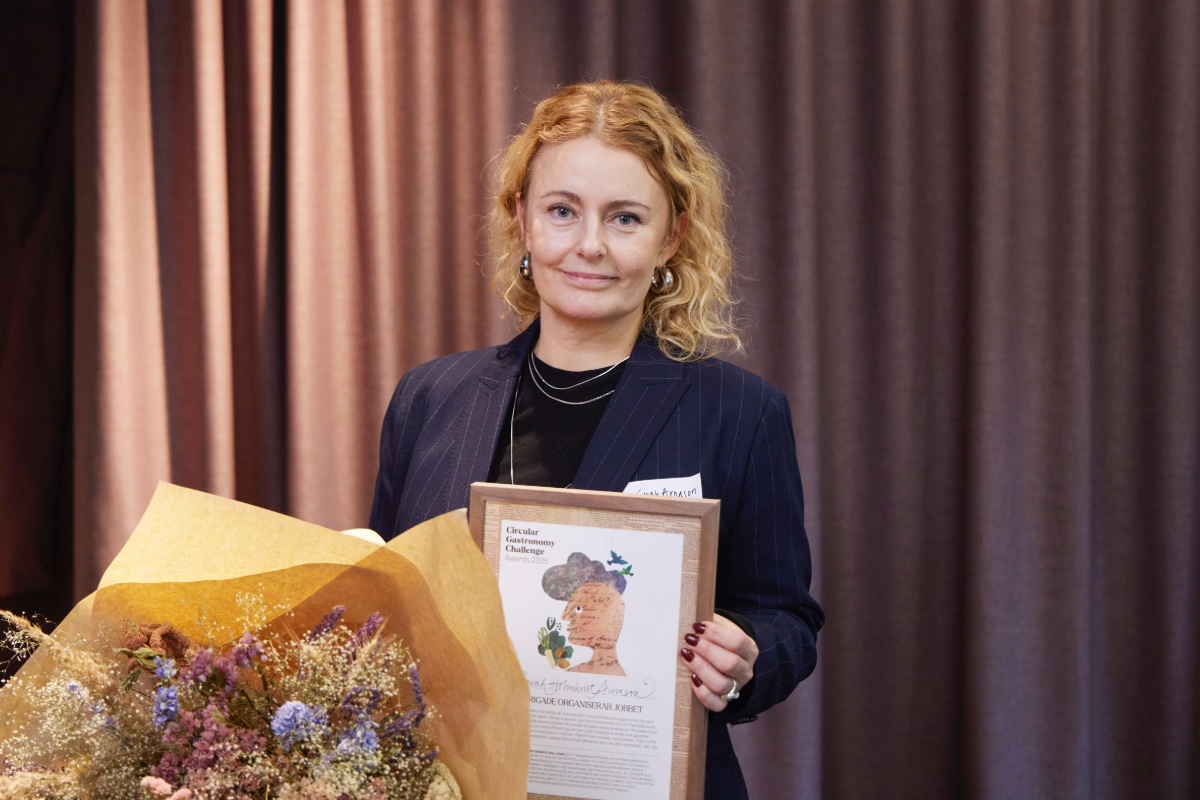
Sarah Holmkvist Arnason was one the winners of the Circular Gastronomy Challenge 2025, announced on 26 January.. The jury’s citation read as follows:
“Using available resources more efficiently is the fastest route to a healthier food system. This applies not only to ingredients, but also to labour and time. Using a cloud-based kitchen operating system, Brigade transforms restaurant menus into precise lists of purchasing needs and task allocation, and ensures that staff receive their assignments, instructions and checklists on their phones. The platform reduces resource waste, frees up time for gastronomic creativity, creates economic sustainability and circular resource thinking – all in one.”
Now that you’ve won the Circular Gastronomy Challenge, what kind of support are you hoping for?
“For us it would be valuable to make contacts – especially around how we can implement and use AI technology. Six years ago when we started developing Brigade, nobody was talking about AI, and now it’s moving fast. Contacts in terms of marketing would also be welcome.”
Sarah Holmkvist Arnason believes that in order to grow – including outside Sweden – they will eventually need to find a partner.
“We ourselves think we have something really exciting going on with Brigade, but we want to be able to move forward at our own pace.”